
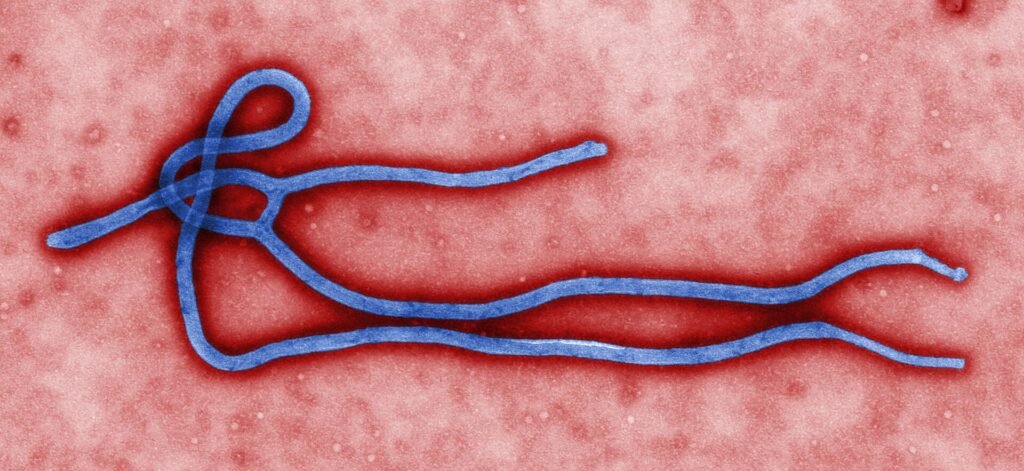
The threshold is symbolic, but it shows the scale of the tragedy. According to the latest report from the Congolese health ministry, covering the period to 25 October and published on Monday, the Ebola outbreak in the Democratic Republic of the Congo now stands at 10,060 confirmed cases and 4,887 deaths, a case fatality rate of 48.6%.
A rare strain, record spread
Declared on 15 May 2026, this 17th Ebola outbreak in the DRC is caused by the Bundibugyo virus, a much rarer strain than those seen in previous major outbreaks. It is already considered the fastest and most widespread ever recorded.
On 25 October alone, 96 new cases were reported: 58 in North Kivu, 32 in Ituri and 6 in Tshopo. Ituri remains the epicentre, with more than 7,200 confirmed cases, nearly 72% of the total. In all, 66 health zones across eight provinces have been affected. The only glimmer of hope: 2,684 people have been declared recovered.
The virus travels
The outbreak has crossed borders. Nigeria confirmed its first imported case in Abuja on 20 October, becoming the fifth country to detect the virus, while Kenya reported its ninth case. According to the African health agency Africa CDC, the first Nigerian and Kenyan patients had both transited through Entebbe airport in Uganda. A Nigerian patient has been evacuated to Switzerland and 53 contacts are being monitored.
Uganda, which declared the end of its own outbreak (20 cases, 2 deaths) this summer, has toughened its stance: anyone who has stayed in the DRC can no longer transit through its territory, including on charter flights. Screening has been stepped up at Entebbe and at border posts. In early October, a Médecins Sans Frontières staff member infected in the DRC was also evacuated to the Netherlands.
Health workers in danger, disinformation and cholera
On the ground, the response is running up against fear and disinformation. Again on Monday, a nurse was killed and a health worker injured in an attack on a team responding to an Ebola case. And the country is simultaneously facing a cholera outbreak: more than 125,000 suspected cases and 3,644 suspected deaths were recorded between January 2025 and the end of September 2026, according to the WHO.
Key points
Ebola is transmitted through direct contact with the bodily fluids of a sick or deceased person, not through the air. People travelling to the region, for example to visit family, should check the travel advice of the FPS Foreign Affairs and contact a doctor if they develop a fever within three weeks of returning, mentioning their trip.
Sources : Actualite.cd, ONU Info, Euronews, ONU Info, Africanews
Photo: CDC/Cynthia Goldsmith / Public domain, via Wikimedia Commons